
Being surprised at sleep counts
Yes, the data is coming in: being surprised about sleep does disrupt biased sleep-wake perception, with the potential to improve sleep. Our research on the weirdness of our sleep-wake perception continues..
The Sleep Surprises Questionnaire is a 22 item questionnaire assessing and simultaneously shaping openness to surprise about sleep, with access to the questionnaire for surprise-focused researchers and clinicians. Please click here for access, which also includes email support from sleep psychologist Rosemary Clancy.

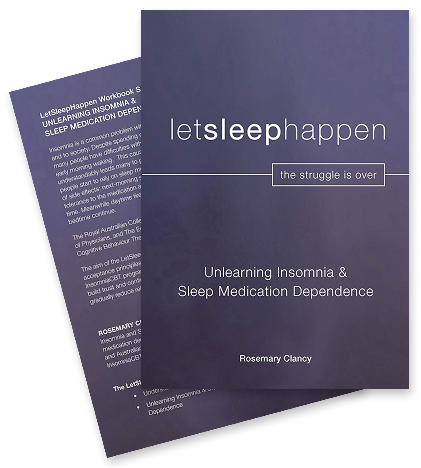
This Insomnia-CBT program instils good sleep habits and flexible expectations, to build trust and confidence in sleep, improve mood, and make it easier to then gradually reduce reliance on sleep medications.
Disclaimer: This "Unlearning Insomnia & Sleep Medication Dependence" workbook is a learning and awareness tool for Insomnia sufferers who may be dependent on prescription sleep medications. It is not a substitute for contracting with a prescribing medical practitioner who can provide medical supervision of medication reduction. The author is not responsible for any loss, liability, damage or injury suffered or incurred by any person in connection with the information contained in this workbook, or by anyone who receives & acts on advice from a reader of this workbook.
A LetSleepHappen treatment can bring you measurable, substantial improvement in
your sleep and daytime energy and activity levels by using strategies drawn from
these evidence-based therapies:
So that we can tailor a plan to you to help get your sleep-wake cycle back to normal:

Yes, the data is coming in: being surprised about sleep does disrupt biased sleep-wake perception, with the potential to improve sleep. Our research on the weirdness of our sleep-wake perception continues..

COMISA is co-occurring insomnia and obstructive sleep apnea. In midlife women, OSA is often missed or undertreated, as insomnia and sedative use dominate the clinical conversation. But the sedatives impact respiratory function, risking worse respiratory obstruction or reduced drive to breathe....

Getting used to continuous positive airway pressure (CPAP) isn't easy; many give up because of suffocation sensations & panic. We discuss desensitisation strategies, and how you've probably intuitively desensitised to aversive sensations in the past without thinking much about it.